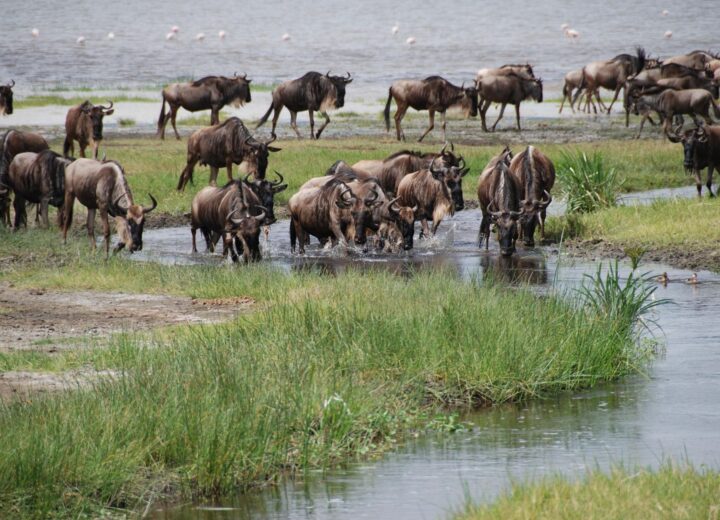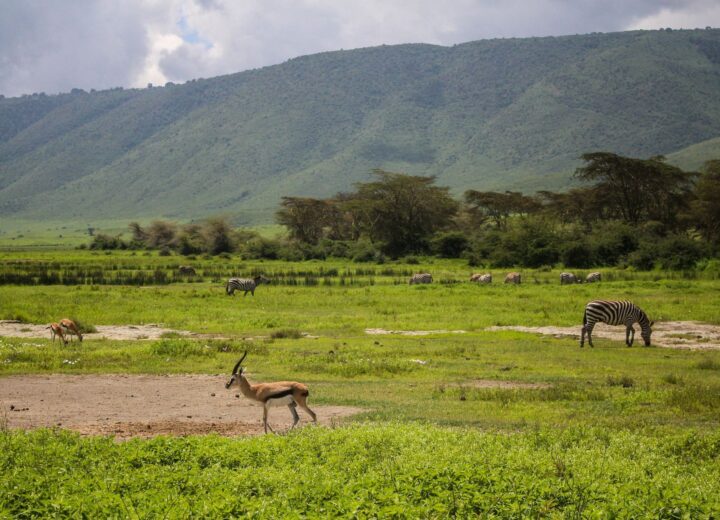
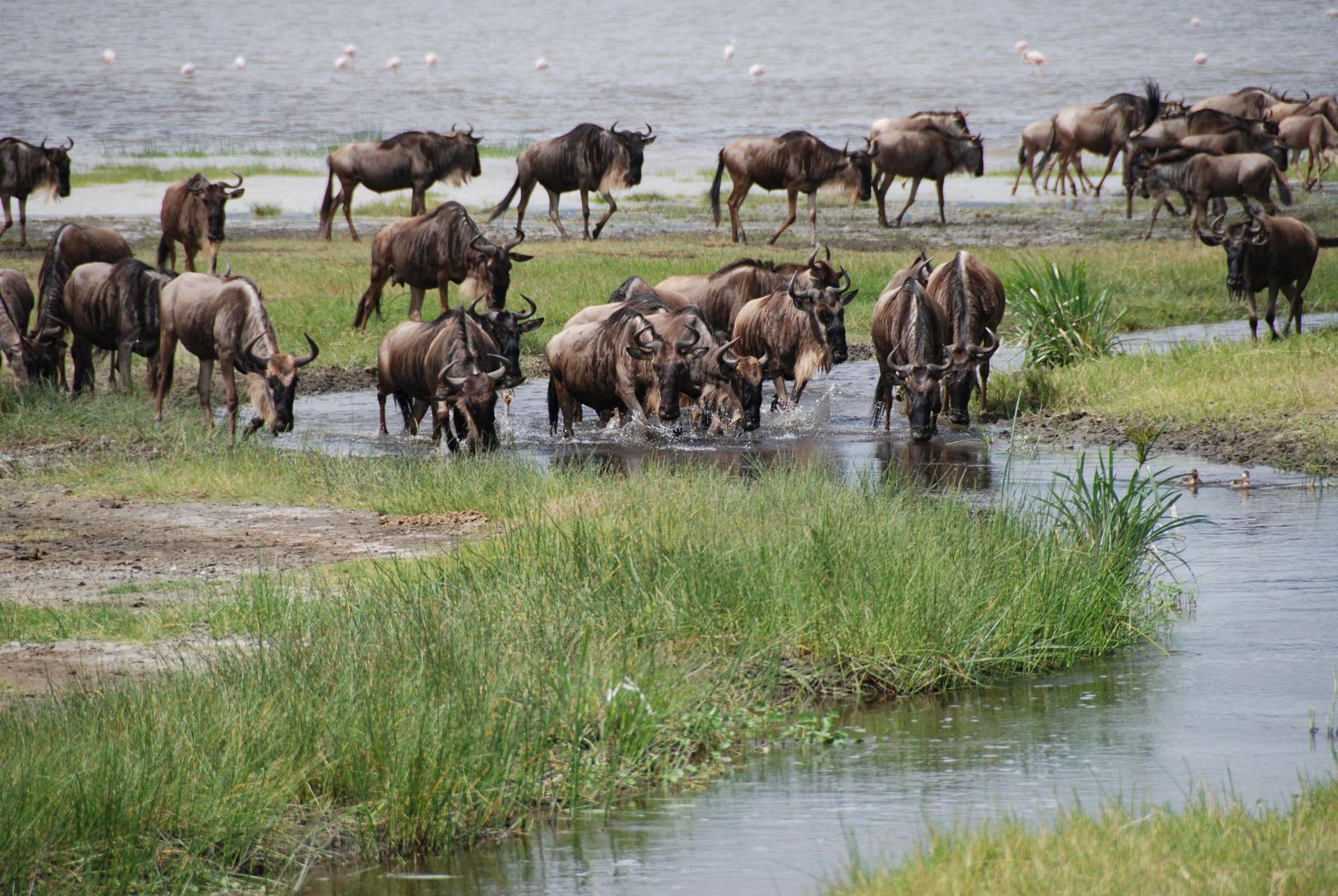
The Great Migration is not a single event but a year-long journey. Around 1.3 million wildebeest, joined by hundreds of thousands of zebra and gazelle, follow the rains in a great clockwise loop through Tanzania’s Serengeti and Kenya’s Maasai Mara. Where you should be depends entirely on when you can travel.
January to March: calving in the southern Serengeti
The herds gather on the short-grass plains around Ndutu, where nutrient-rich grass feeds nursing mothers. In February thousands of calves are born every day, and lion, cheetah and hyena gather for the easy hunting. It is one of the most action-packed times to be on safari.
April and May: on the move
The long rains arrive and the herds begin moving north-west through the central Serengeti. This is green season: fewer visitors, lower rates and spectacular skies. Some camps close, so planning matters.
June: the Grumeti crossings
In the Western Corridor the herds must cross the Grumeti River, home to some of the largest crocodiles in Africa. Crossings are smaller than those of the Mara but just as dramatic.
July to October: the Mara River
From July the herds pour into the northern Serengeti and the Maasai Mara. The Mara River crossings, when thousands of wildebeest hurl themselves down steep banks into crocodile-filled water, are the most famous wildlife spectacle on earth. August and September are usually the peak.
November and December: heading south
The short rains turn the herds back towards the southern Serengeti, ready for calving to begin again.
Our advice
Nature does not follow a calendar exactly, and the timing shifts from year to year with the rains. A good guide who follows the herds daily makes all the difference. For the Mara River crossings, allow at least two full days in the Mara or northern Serengeti, and book 6 – 9 months ahead for July to October.